


Facial ageing is a complex process influenced and controlled by intrinsic and extrinsic factors*** that alter each component of the facial anatomy. The science of ageing has recently acquired valuable knowledge of both the superficial and deep facial fat compartments in facial ageing. The deep compartments offer structural support to the midface, and the superficial fat compartments contribute to the signs of facial ageing.
***Intrinsic or chronological ageing affects the entire body’s skin, including sun-protected sites. Extrinsic ageing is induced by chronic ultraviolet (UV) radiation, exposure, smoking, and other pollutants and is superimposed on the intrinsic ageing process.
A youthful face is represented by high cheekbones, cheek volume and a sharply defined jawline. These characteristics represent the “triangle of youth”.
Through ageing, the triangle becomes inverted as the face becomes oblong, cheeks flatten, and jowls appear.


It is currently clear that some facial skeleton regions undergo resorption with ageing. Areas with a strong predisposition to resorption include the midface skeleton, particularly the maxilla, including the base region of the nose, the superomedial and inferolateral aspects of the orbital rim and the pre-jowl*** area of the mandible.
***Pre-jowls represent the depression in front of the jowls (the lower part of a person’s cheek, especially when it is fleshy or drooping).


The changes occurring within each of the main layers of the facial anatomy include facial skeleton remodelling, fat pad atrophy or repositioning, muscle tone and thickness changes, and weakening and thinning of the skin.
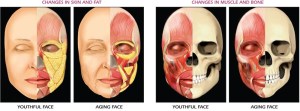

Failure to address changes in the skeletal foundation of the face may limit the potential benefit of any rejuvenation procedure. The ageing process causes the youth triangle to descend as the skin quality decreases with the loss of collagen, elasticity and hyaluronic acid, and bone is reabsorbed around the eyes, cheeks and jawline. Fat pads in the face diminish, which leads to hollowing in the tear trough, flattening in the cheeks and downturned mouth corners.

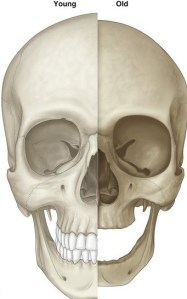


Understanding the layers of the face and recognising the alterations they undergo in ageing helps clinicians undertake an appropriate assessment and decide on the best treatment approach for facial rejuvenation to help and slow down parts of the ageing process to achieve optimal outcomes for their patients.
References
- Rohrich, Rod J. MD; Avashia, Yash J. MD; Savetsky, Ira L. MD Prediction of Facial Aging Using the Facial Fat Compartments, Plastic and Reconstructive Surgery: January 2021 – Volume 147 – Issue 1S-2 – p 38S-42S.
- Golden Gate Obstetrics and Gynecology. The triangle of youth. URL: https://goldengateobgyn.org/the-triangle-of-youth/#:~:text=A%20youthful%20face%20has%203,the%20point%20at%20the%20chin. [Accessed 26.01.2022].
- Mendelson B, Wong C-H. Changes in the Facial Skeleton with Aging: Implications and Clinical Applications in Facial Rejuvenation. Aesthetic Plastic Surgery (2012), 36:753–760.
- Swift A., Liew S., Weinkle S., Garcia J. and Silberberg M.B. The facial aging process from the “inside out”. Aesthetic Surgery Journal (2021), Vol 41(10), 1107-1119.